Whiskers, fur and paw prints: keepsakes to gather before your cat leaves home
A clay paw impression can cost as little as $10 through a cremation provider[1], but only if someone asks before your cat is taken into their care. Here's what to collect, how, and what can safely wait.
By the Cat Cremation Services editorial team · Updated September 24, 2026 · 6 min read · Sources
- A before-collection checklist you can do in minutes
- Step-by-step whisker, fur and print methods
- Real prices if you'd rather a provider did it
The short answer
Which cat keepsakes need to be taken before cremation?
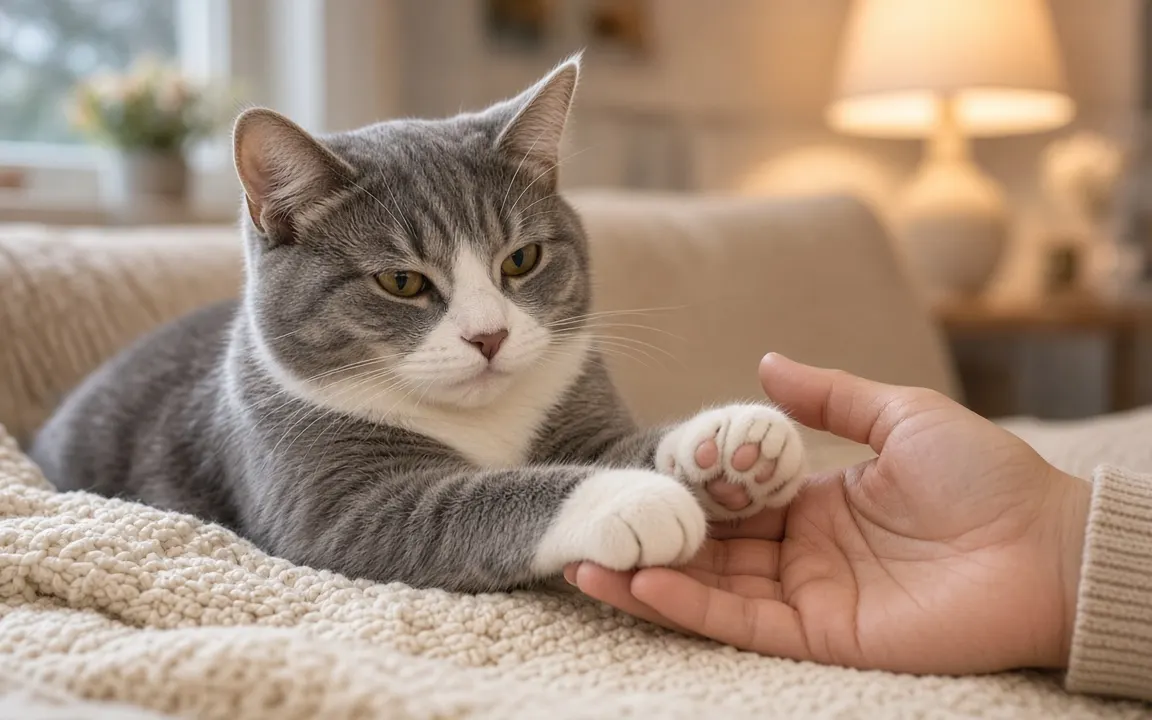
Fur clippings, paw prints, nose prints and the collar all have to be taken before your cat goes to the crematory, because afterward there's nothing left to take them from. Shed whiskers, toys, photos and recordings of their voice can be gathered anytime. If you do just one thing now, clip a small lock of fur and make a paw print; both take under ten minutes.
People often regret the keepsakes they didn't think of in the moment, not the ones they chose not to make. If your cat is being euthanized at a clinic or at home, you can ask the vet team to help, and many will make a print or clip fur without being asked twice. Our article on working with your vet on cat end-of-life care covers how to raise it ahead of the appointment.
Which small keepsake would mean the most from your cat?
Tap an answer to vote and see how others answered. Anonymous.
Uniquely feline
How to collect and store your cat's whiskers
Cats shed whiskers naturally, a few at a time, and many owners have been quietly saving them for years. Look where your cat slept, ate and groomed: around the food bowl, on a dark blanket, in the corners of a window perch and under the radiator. A flashlight held low across the floor makes stray whiskers glint.
If you don't have any shed whiskers, you can snip one or two after your cat has died, cutting close to the muzzle with small scissors. Never trim a living cat's whiskers for a keepsake, as whiskers help them judge space. The same goes for other cats in the house who may lose a whisker while grieving; just collect those as they fall.
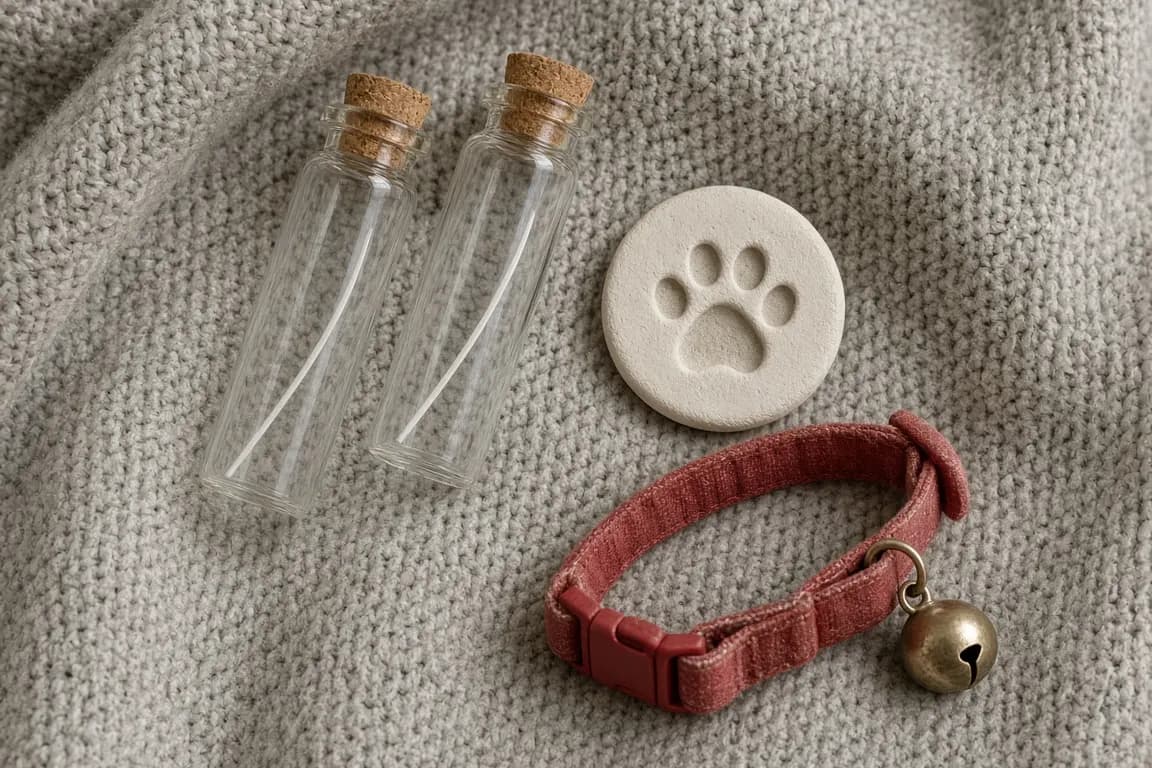
- Glass vial with a cork or screw cap: the classic choice, easy to display. Choose one long enough that the whisker doesn't bend.
- Acid-free envelope or archival paper: lay whiskers flat and label with the date and where you found them.
- Photo locket or shadow box: tape the whisker's root end with a tiny strip of archival tape so it stays in place.
A lock of their coat
Clipping and sealing fur without leaving a bald patch
Choose a spot that won't show if you'd like to see your cat again before cremation: the chest ruff, the inner thigh or behind the shoulder. For a cat with patterned fur, a tabby's striped flank or a calico's orange patch, pick the color you picture first when you think of them. Some families take two small locks for that reason.
- Gather a lock about the thickness of a pencil and tie it firmly near the skin with thread or a thin ribbon.
- Cut on the skin side of the tie, so the strands stay bundled instead of scattering.
- Place the bundle in a small zip bag or glass vial and seal it. A drop of glue on a vial's cork keeps it closed for good.
- Store away from direct sun, which fades pale and orange coats faster than you'd think.
A brush full of loose undercoat is a keepsake too, especially for longhaired cats. Collected fur can later go into felted ornaments, lockets or even a memorial diamond: one Swiss lab accepts about 5 g of fur in place of ashes[2]. Our article on cat ash jewelry and keepsakes covers the diamond option in full.
Paws and nose
Clay and ink paw prints: doing it yourself or asking a provider
Paws are easiest to position in the first hour or two after death, before the body begins to stiffen. The ASPCA's end-of-life care guide also explains how to keep a pet's body cool at home while you work. Clean the pad with a damp cloth and pat it dry. On longhaired cats such as Maine Coons and Persians, tufts between the toes blur the print; smooth them flat or trim them gently.
- Clay: roll oven-bake or air-dry clay about half an inch thick, press the paw straight down with gentle, even pressure on the back of the foot, then lift straight up. Poke a ribbon hole before it sets.
- Ink: use a pet-safe ink pad or an inkless wipe kit, rolling the paw from back to front onto thick card. Do three or four; the second is usually the cleanest.
- Nose print: a cat's nose is small, so dab ink lightly and press card to it once, without rolling. It often takes a few tries.
| Keepsake | Typical price | Source |
|---|---|---|
| Clay paw impression (cremation add-on) | $10 | US provider[1] |
| Nose print | $10 | US provider[1] |
| Ink paw prints | $49 | US provider[3] |
| Clay or silver-clay paw print | $76 | US provider[3] |
| Framed print with fur clipping | $133 | US provider[3] |
| Handmade ceramic paw print | From CA$155, 3–4 weeks | Canadian studio[4] |
A print can also become jewelry later. Paw and nose print pendants start from $99.95[5] at one US retailer, made from a scan of the ink print you already have. That's one reason to make ink prints even if you plan on clay. If you'd rather the crematory does it, our estimate of the median paw-print add-on at US crematories is ~$32[6]. To see how prints, frames and a pendant add up, try the memorial budget planner.
Free tool
Memorial budget planner
Add up cremation, urn, keepsakes and a farewell so the total holds no surprises.
Things they used
The collar, bell, tag and favorite toy
Remove the collar before collection. Crematories may take it off anyway, and metal buckles and bells don't come through intact. Keep the bell even if it's scratched; for many owners the sound of it is the memory. An engraved ID tag is worth keeping with the collar, and if your cat was microchipped, let the registry know they've died so you don't receive reminder letters.
Toys are a real choice rather than an automatic keep. Some families send a catnip mouse or the blanket from the window seat with their cat, and keep a second one at home. If you're unsure, keep it. You can't undo sending it. Surviving cats often seek out a familiar blanket, too; our guide to loss in multi-cat homes explains why scent matters to them.
What would you send with your cat to cremation?
Tap an answer to vote and see how others answered. Anonymous.
These objects often end up together on a shelf or in a shadow box. Our guide to building a quiet memory display for your cat shows how to arrange and secure them.
Sight and sound
Saving photos, videos and the sound of their meow
Before collection, take close-ups you'll never get again: the pads of each paw, the whorl of fur on their forehead, the ear tufts, the kink in their tail. These details fade from memory faster than faces do. If gathering them brings the grief up hard, Cornell's free Pet Loss Support Hotline is staffed by veterinary students trained to listen.
Voice is the keepsake people don't think of until it's gone. Search your phone for videos and pull the audio of their meow, chirp or purr into its own file. Back everything up to two places, such as cloud storage and a drive, because a lost phone shouldn't take your cat's voice with it. A family group chat asking everyone for their clips often turns up sounds you'd forgotten.
Most people have hundreds of photos of their cat and almost no recordings of the sound they made at the door.
Keeping their body
Freeze-drying and taxidermy for cats: costs and timing
A small number of owners choose to preserve their cat's body; roughly 7%[7] of pet owners choose taxidermy, by one industry estimate. Freeze-drying is the more common modern route, running $1,000–$2,500[8] for a cat or small dog. At one published price list, a 10 lb cat would cost about $2,290–$2,590[9] by our estimate. In the UK, traditional taxidermy for a domestic cat starts from £2,300[10].
This decision can't wait. Contact the preservation studio before anything else, as most want the body cooled or frozen quickly and in a natural curled or sitting position. Expect a wait of many months. If you're torn, you can plan cremation and keepsakes now and rethink later; the farewell planner helps you list what to do before, during and after.
Free tool
Farewell & memorial service planner
Build a simple goodbye: who, where, readings, rituals and a checklist.
Saying goodbye in a small space? The apartment goodbye guide covers keeping your cat cool and calm at home until collection. When you're ready, send us a few details and we'll reply by email with local providers that offer prints and fur clippings.

Reader polls
What would you choose?
Vote anonymously and see how other readers answered. The results are live counts from people who visit this site, so they show real opinions, not a scientific sample.
Which small keepsake would mean the most from your cat?
Tap an answer to vote and see how others answered. Anonymous.
What would you send with your cat to cremation?
Tap an answer to vote and see how others answered. Anonymous.
Which memorial feels most like your pet?
Tap an answer to vote and see how others answered. Anonymous.
Questions people ask
How long do I have to make a paw print after my cat dies?
Paws are easiest to shape in the first hour or two. After that the body stiffens, which makes clay prints harder but not impossible, and the stiffness eases again after a day or so. If your cat is at a clinic, ask the team to make prints before the crematory collects them; many are used to the request.
Is it strange to keep my cat's whiskers?
Not at all. Saving shed whiskers is one of the most common cat keepsakes, and plenty of owners start a whisker jar years before their cat dies. Whiskers are durable, weigh nothing and are unmistakably feline, which is why they turn up in lockets, vials and shadow boxes so often.
Can the crematory make a paw print for me?
Many can, often for a small add-on fee, and some include one print in a private cremation package. Ask when you book, not after, and say whether you want clay, ink or a nose print. Confirm it will be made before cremation and returned with the ashes.
Will a fur clipping fade or fall apart over time?
Fur is stable if you keep it dry, sealed and out of sunlight. Orange and pale coats fade fastest in bright light. A glass vial or sealed bag stored in a drawer or shadow box will keep a clipping looking much the same for decades. Avoid plastic bags that trap moisture in humid rooms.
Should my other cats smell the keepsakes?
Letting surviving cats sniff the blanket or collar can help some of them settle, since scent is how they understand absence. Keep delicate items such as whisker vials and clay prints out of reach, as a curious paw can knock them down. Our guide to loss in multi-cat homes covers their reactions more fully.
What if I didn't take any keepsakes before cremation?
You still have more than you might think. Shed whiskers and fur often remain on bedding, brushes and furniture for months, a vet or groomer may have photos, and old videos hold their voice. Many people also have a print made from a clear photo of their cat's paw instead of the paw itself.
Keep reading

Keepsakes made with ashes
Pendants, glass beads and diamonds from a cat's small amount of ash.

A memory shelf for your cat
Arranging the urn, collar and whisker vial safely.

Farewell planner
A step-by-step list for the hours before and after.

Find providers who offer prints
Tell us where you are and we'll email options with prices.
Sources and our estimates
- [1] Memorial add-ons at A Greener Place: $15 laser-engraved paw print, $10 clay paw impression, $10 nose print, $5 fur clipping. A Greener Place Pet Aquamation – Pricing, 2026.
- [2] LONITÉ needs at least 150 g (5 oz) of pet ashes, or 5 g of fur, to make a memorial diamond. LONITÉ – Pet cremation diamonds, 2026.
- [3] Final Gift charges $49 for ink paw prints, $76 for a clay or silver-clay paw print, $111 framed, and $133 framed with a fur clipping; a fur clipping alone costs $23. Final Gift Pet Memorial Center – Memorial Products, 2026.
- [4] Spawts, a Canadian studio, charges from CA$155 for a handmade ceramic paw-print keepsake and asks buyers to allow 3–4 weeks. Spawts – Ceramic keepsakes, 2026.
- [5] Paw print and nose print pendants at Memorials.com start at $99.95. Memorials.com – Pet print jewelry, 2026.
- [6] Paw-print add-ons at US crematories have a median price of about $32, from $10 to $76. Our estimate: median of [$10 clay (AGP), $15 laser engraving (AGP), $49 ink (Final Gift), $76 clay (Final Gift)]. How we calculate.
- [7] About 7% of pet owners choose taxidermy, per Astute Analytica. Astute Analytica via GlobeNewswire — Global Pet Preservation Services Market to Hit USD 112.7 Million by 2032 (Apr 2, 2024), 2024.
- [8] Memorials.com puts freeze-drying at $1,000–$2,500 for a cat or small dog and $2,000–$5,000+ for a medium to large dog. Memorials.com – Pet Taxidermy Guide, 2025.
- [9] Freeze-drying a 10 lb cat at one published price list would cost about USD 2,290–2,590. Our estimate: Low: 2,095 + 49 x (10-6) lb; High: 2,095 + 49 x 10 lb. How we calculate.
- [10] Taxidermy UK charges from £2,300 to preserve a standard domestic cat, excluding cremation fees. Taxidermy UK – Pets policy, 2026.
Arrange a cat cremation that includes keepsakes
Tell us what you need and where you are. We'll reply by email with clear options and prices so you can decide in your own time.