When one cat dies: how to help the cats (and dog) still at home
About 53 million[1] US households own a cat, and many have more than one. When a companion dies, the cats left behind often notice, and some need more help than they let on.
By the Cat Cremation Services editorial team · Updated September 24, 2026 · 7 min read · Sources
- Behavior changes to expect, week by week
- Clear signs that mean call your vet
- Aftercare options by email while you look after everyone else
The short answer
Do cats grieve when another cat in the house dies?
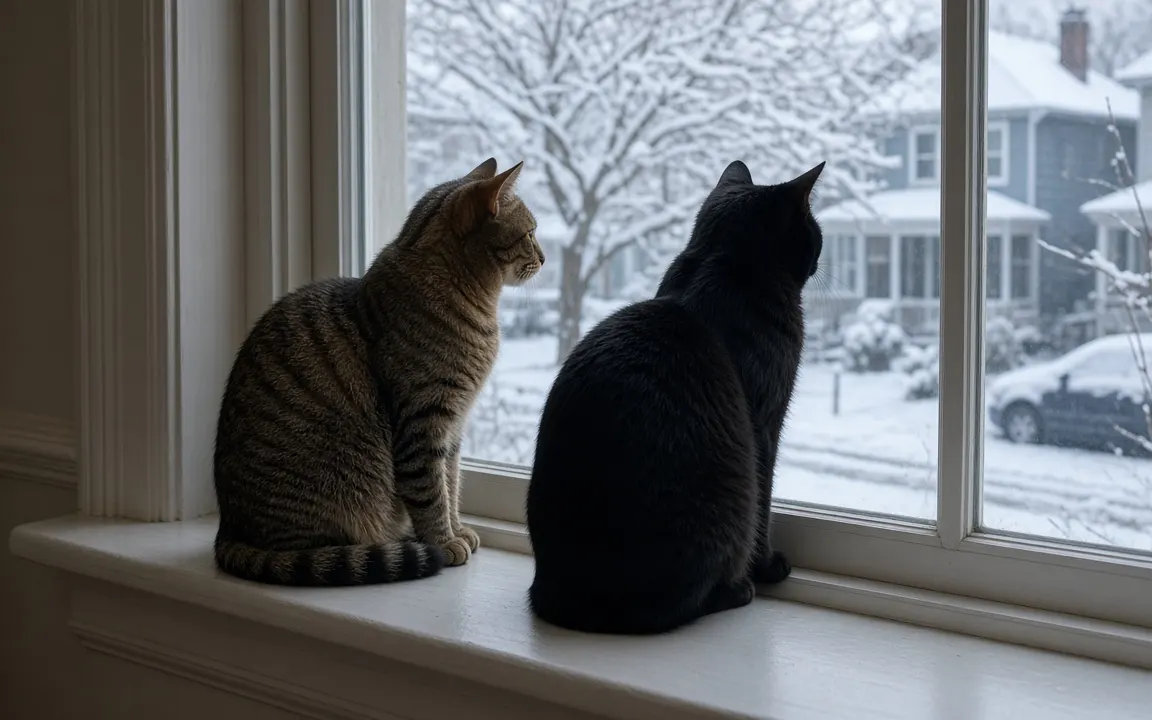
Many do. Surviving cats commonly search for their companion, call out, sleep more, eat less or become unusually clingy for a few weeks. Others show little change, and a few seem more relaxed, especially if the two cats merely tolerated each other.
Whether we call it grief or a response to a changed household, the behavior is real and it usually settles within two to six weeks. The one change you should never wait out is a cat who stops eating, which we cover below.
This is a common situation. In the US, by our estimate, about 4.7 million pet cats[2] die each year, and a large share of them leave another cat behind. How a survivor reacts depends mostly on the bond: littermates who groomed each other react very differently from two cats who divided the house into territories.
Week by week
What changes to watch for in the first month
Cats show distress through small shifts rather than dramatic displays. Keep a quick note on your phone for the first two weeks: what they ate, whether they used the litter box, where they slept. It turns a vague worry into something you can show your vet.
| What you see | What it may mean | What helps |
|---|---|---|
| Searching rooms, checking the carrier or the other cat's hiding spots | Looking for a familiar companion whose scent is still around | Let them search. Don't block off rooms suddenly. |
| Loud calling or yowling, often at night | Contact-calling for the missing cat, or unsettled by the change | Play before bed and a small late meal can help. It usually fades within weeks. |
| Sleeping in the other cat's bed or spot | Seeking the familiar scent | Leave the bed where it is for now. |
| Following you, sitting on you, wanting the bedroom | Looking for comfort and reassurance from the person left | Give it freely. Extra closeness is fine. |
| Hiding more, less interest in play | Stress or low mood | Short, gentle play sessions; don't force contact. |
| Eating noticeably less | Stress, or illness masked by the upheaval | Monitor closely and call your vet early (see below). |
Some changes are welcome. A shy cat who was pushed around may suddenly claim the sunny window perch or come out to greet visitors. That isn't heartlessness; the social pressure has lifted.
Before collection
Should the other cats see the cat who died?
Many vets and owners think it helps, and it rarely does harm. A cat who simply vanishes after a vet trip leaves the others with a scent trail that leads nowhere. A cat they've been able to sniff offers an ending of sorts.
- Lay the cat who died on their own blanket in a quiet room where the others feel safe.
- Open the door and let the surviving cats come in on their own. Don't carry them in.
- Give them ten to twenty minutes. Some sniff and leave, some lie down beside the body, and some won't come in at all.
- Then let the provider collect, or take your cat to the vet, as planned.
If your cat died at the clinic, you can ask to bring the body home for a few hours before aftercare. It's more common than people assume: one UK vet chain told the Competition and Markets Authority that about 29%[3] of owners whose pet died at the practice took their pet home. A cremation provider can collect from your house afterward instead of from the vet.
If you have more than one cat, did the others see the cat who died?
Tap an answer to vote and see how others answered. Anonymous.
The smell of home
Scent, bedding and the places your cat used
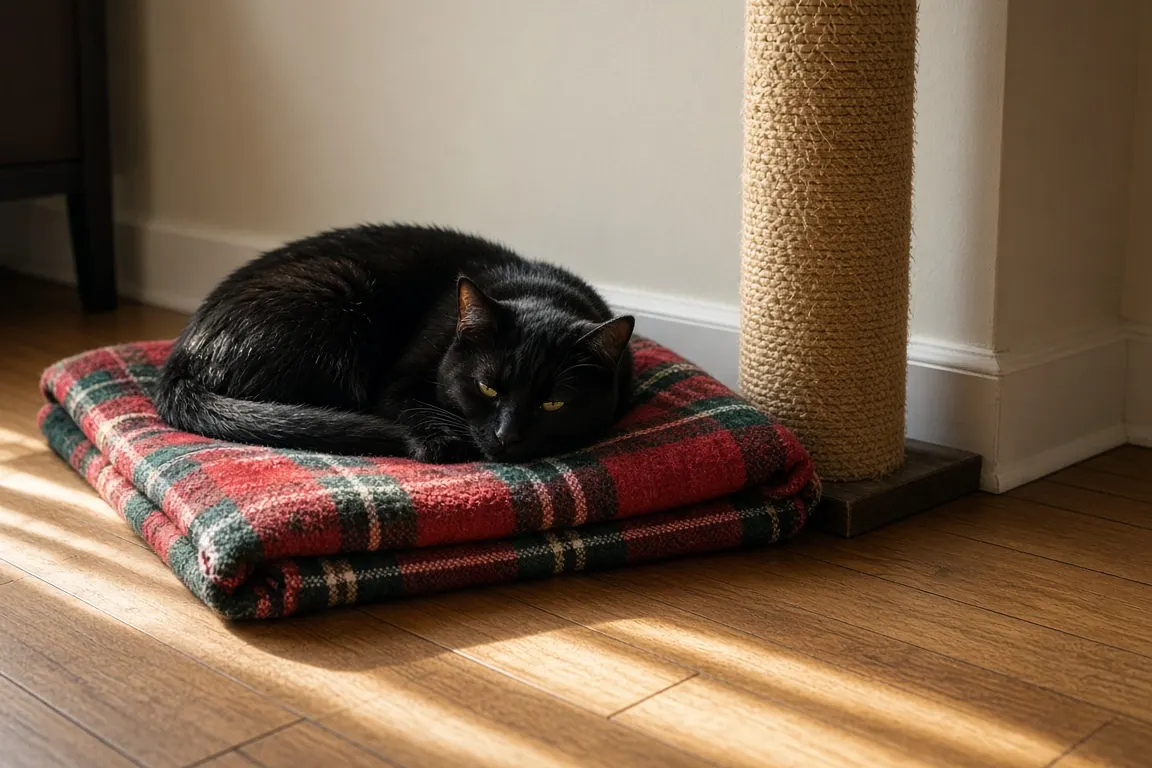
Cats map their home by smell. Every scratching post, blanket and cheek-rubbed doorframe carried the other cat's scent, and your survivors will keep checking those points. Removing everything at once can make the house feel strange to them, just when they need it to feel safe.
- Leave shared bedding unwashed for a week or two, then wash one item at a time.
- Don't change the litter setup right away. If you had three boxes for two cats, keep three for a few weeks, then reduce gradually. Moving or removing boxes during a stressful period is a common trigger for accidents.
- Keep scratching posts and cat trees in place. They're territorial landmarks as well as furniture.
- Save something for yourself first. Before you wash anything, pick out a blanket or collar you'd like to keep. Our whisker and fur keepsake guide covers gathering shed whiskers too.
A plug-in feline pheromone diffuser helps some households through the unsettled weeks. It's not a cure, but it's a low-risk thing to try if a survivor is hiding or spraying.
When to call the vet
When a grieving cat stops eating
This is the part not to wait out. Cats don't cope well with going without food. A cat who eats little or nothing for several days, particularly one carrying extra weight, can develop hepatic lipidosis, a serious fatty liver condition that needs veterinary treatment.
Warm, smelly food tempts a stressed cat more than dry kibble: gently warmed wet food, a little plain cooked chicken, or hand-feeding in a quiet room. Also remember that grief can hide illness. Surviving cats are often a similar age to the one who died, and the upheaval can mask early kidney disease or a thyroid problem that was already starting. The Cornell Feline Health Center's health topics explain these conditions in plain language, but your vet is the one to call.
Owners don't eat well either. In the RSPCA's pet bereavement survey, 43.1% of bereaved owners had appetite changes[4]. Feeding the cats on schedule is a good prompt to eat something yourself.
Shifting dynamics
Hierarchy shifts, squabbles and sudden aggression
In a home with three or more cats, the loss of one can reshuffle the whole group. A cat who was kept in line may start testing boundaries. Two cats who got along through a third may start hissing at each other. Redirected aggression is common too: a cat startled or frustrated by the change swipes at whoever is nearest, including you.
Most of this settles on its own within a few weeks. Help it along by adding resources rather than rationing them: extra water bowls, a second feeding station, more high perches. Separate cats who are fighting for a day or two and reintroduce them slowly with food and play. If fights draw blood or keep escalating, talk to your vet or a feline behaviorist.
The wider household
Dogs in the home, and whether to get a new cat
Dogs who lived alongside a cat can grieve too, and they tend to show it more openly: waiting at doors, whining, losing interest in walks. Keep their walks and meals on time; the routine steadies everyone, you included. Watch the interaction between the dog and a surviving cat, since a cat who relied on a companion for confidence may suddenly become warier of the dog.
Should you get a new cat for the one left behind? Usually not straight away. An adult cat who lost a bonded partner doesn't automatically want a stranger, and introductions go badly when everyone is already unsettled. Wait until the survivor is eating, sleeping and playing normally, typically at least a few weeks, then introduce any newcomer slowly over days, starting with scent swaps.
Some cats are clearly lonely: a young, sociable survivor who follows you constantly and cries at doors may do well with a calm companion. An older cat who always preferred their own space may be happier as an only cat for their remaining years. Median longevity for cats in one large English study was 14.0 years[5], so a teenage survivor's age and health should shape the decision.
How long before you felt ready for another pet?
Tap an answer to vote and see how others answered. Anonymous.
Looking after yourself
Caring for the others while you're grieving
Having other animals to look after can be a lifeline and a strain at the same time. They get you out of bed and give the day a shape. But they also keep reminding you of the one who's missing, at the food bowls, the door, the foot of the bed. In the RSPCA's survey, 72.6% of bereaved owners said they lost their daily routine[6]; with surviving pets, that routine stays, and it can feel both steadying and painful.
Be patient with yourself. The grief check-in is a short private set of questions that helps you see how you're doing this week, and grief after losing a cat has help for the harder days, including free helplines. If children are affected too, see talking with children about losing a cat.

Free tool
Pet loss grief check-in
A private, two-minute check-in on how you're coping, with ideas that match where you are.
Households with several cats often end up planning for more than one set of ashes over the years. A cat's ashes weigh only about 6.7 oz[7] for a 12 lb cat, so a single shelf can hold several small urns side by side; our memorial shelf guide shows how people arrange them. If you'd like to set up the goodbye with your other cats in mind, the farewell planner helps you think it through.

Free tool
Farewell & memorial service planner
Build a simple goodbye: who, where, readings, rituals and a checklist.
When you're ready to arrange aftercare, send us a short request and we'll reply by email with local options, including collection from home so your other cats aren't left alone for a clinic trip.

Reader polls
What would you choose?
Vote anonymously and see how other readers answered. The results are live counts from people who visit this site, so they show real opinions, not a scientific sample.
If you have more than one cat, did the others see the cat who died?
Tap an answer to vote and see how others answered. Anonymous.
How long before you felt ready for another pet?
Tap an answer to vote and see how others answered. Anonymous.
What was the hardest part of losing your pet?
Tap an answer to vote and see how others answered. Anonymous.

Free tools to help you plan
Pet loss grief check-in
A private, two-minute check-in on how you're coping, with ideas that match where you are.
Farewell & memorial service planner
Build a simple goodbye: who, where, readings, rituals and a checklist.

Ashes sharing planner
Split ashes fairly between family members, keepsake urns and jewelry.
Questions people ask
How long do cats grieve for another cat?
Most surviving cats settle within two to six weeks, though some bonded pairs take a couple of months to fully adjust. Signs of settling are a normal appetite, regular litter habits, and a return to play and usual sleeping spots. If changes last longer than that, or get worse, a vet check is worthwhile.
Why is my cat yowling at night since the other cat died?
Night calling is one of the most common reactions. Your cat may be contact-calling for a companion, or simply unsettled in a quieter house. A play session before bed, a small late meal and a warm bed near yours often help. If the yowling starts suddenly in an older cat, ask your vet about thyroid and blood pressure too.
Do cats know when another cat is dying?
Cats are very sensitive to changes in smell, behavior and routine, so many seem to notice when a companion is ill. Some become protective or stay close; others keep their distance from a sick cat. It's hard to know what they understand, but they clearly respond to the changes.
Should I keep my surviving cat indoors for a while?
If your cat usually goes outside, keeping them in for a week or two can be sensible, especially if they're unsettled or searching. Stressed cats sometimes roam further than usual looking for a missing companion. Let them back out once they're eating and behaving normally, ideally at their usual times.
Is it okay for my surviving cat to sleep in the dead cat's bed?
Yes. The familiar scent is comforting, and it's one of the most common things surviving cats do. There's no hygiene problem with a cat who died of an ordinary illness. If the cat died of something infectious, check with your vet before sharing bedding.
Can stress from losing a companion make my cat ill?
It can contribute. Stress is linked to bladder inflammation in cats, which shows up as frequent trips to the litter box or peeing in odd places, and to reduced appetite. Keep an eye on both, and call your vet promptly if your cat isn't eating or is straining to pee.


Sources and our estimates
- [1] About 53 million US households own at least one cat. American Pet Products Association (APPA) 2025 State of the Industry, 2025.
- [2] Roughly 4.7 million pet cats likely die in the US each year. Our estimate: US cat-owning households (53M) x 1 cat / US cat life expectancy (11.18 yrs). How we calculate.
- [3] Pets at Home told the CMA that about 29% of owners whose pet died in practice (since April 2023) took the pet home to make their own arrangements. UK Competition and Markets Authority - Veterinary services for household pets, Provisional decision report Part A (Oct 2025), 2024.
- [4] 56.4% of bereaved pet owners withdrew socially and 43.1% had appetite changes. RSPCA — Pet Loss Survey Results, 2026.
- [5] In 4,009 confirmed cat deaths in England, median longevity was 14.0 years; the leading causes of death were trauma (12.2%), kidney disorders (12.1%) and cancer (10.8%). O'Neill DG et al. Longevity and mortality of cats attending primary care veterinary practices in England. J Feline Med Surg, 2015 (PMID 24925771), 2015.
- [6] After losing a pet, 72.6% lost their daily routine or sense of purpose, 69.8% had trouble concentrating and 65.9% had sleep problems. RSPCA — Pet Loss Survey Results, 2026.
- [7] A 12 lb cat would be expected to return about 6.7 oz (0.42 lb) of cremated remains. Our estimate: 12 lb x 3.5% x 16 oz/lb. How we calculate.
Find cremation options while you care for the others
Tell us what you need and where you are. We'll reply by email with clear options and prices so you can decide in your own time.