When your cat dies in Burlington: what happens next
Burlington has an estimated 6,850 cat-owning households and roughly 610 cat deaths a year, by our count. This is the local guide we'd want in your place.
- Help for multi-cat households
- Private cremation confirmed in writing
- Options for community cats too
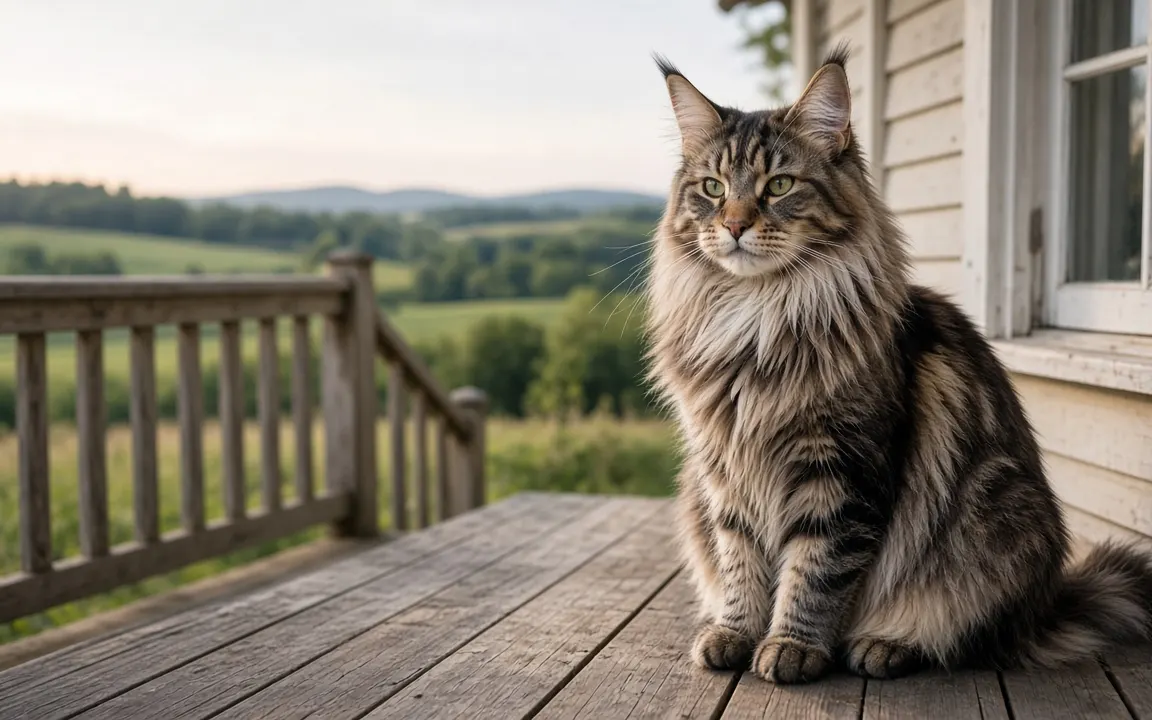
Burlington, Vermont
Who handles cat aftercare in Burlington
Winters roll in off the lake raw and snowy, January nights around 13 degrees, and freezing weather from December into March; July highs reach the low 80s. Cold buys some time, but a body shouldn't sit on an unheated porch or in a car overnight. Choose a cool room indoors, wrap it in a blanket, and plan for collection within about a day, sooner during a summer hot spell.
The Island Line Trail follows the waterfront and runs out onto the old rail causeway into the lake, and on summer evenings it can feel as if half the city is out there, many with animals in tow. Lake Champlain and city parks are shared spaces, so scattering needs a check of local and state rules. Some families keep the ashes at home and bring a photo along on their next sunset visit.
Word travels in a place like Burlington. You may find neighbors asking after your cat, the vet sending a card or someone at the feed store remembering the cat who sat on your porch. Let people help if you can. If your cat went missing and was found on a road, a neighbor may be the one who tells you; it's a hard way to learn, and it's fine to ask them to help you bring your cat home.
With roughly 44,019 residents, Burlington is the largest of the 12 Vermont communities we cover.
Nearby, we also have local pages for Winooski (2 miles), South Burlington (3 miles) and Essex Junction (5 miles), which can help if your vet or the provider you prefer is based there.
Our estimate
6,850
How many cat-owning households Burlington has (estimate)
How we calculated this
44,019 ÷ 2.5 = 17,608 households; × 39% (cat) = 6,850. Homes are counted once however many pets they keep.
Our estimate
610
Burlington families who lose a cat each year (estimate)
How we calculated this
6,850 cat-owning homes ÷ average lifespan (cat: 11.18 yrs) ≈ 610 a year. The real figure is unlikely to be lower.
39%[1]
39% of US households own a cat, which is about 53 million households.
11.18 years[2]
US cats seen at Banfield hospitals have an average life expectancy at birth of 11.18 years.
78.1%[3]
The NFDA projected Vermont's cremation rate at 78.1% for 2024.
clinic $158; home $359; cremation $180; burial $566[4]
CareCredit's 2025 study put US cat euthanasia at $158 in clinic and $359 at home, cat cremation at $180 and cat cemetery burial at $566.
To check the figures yourself, see Montoya et al. 2023, Frontiers in Veterinary Science and CareCredit (Synchrony).
Cremation in Vermont, and what it means for cat owners
With cremation chosen for roughly 78.1%[3] of the population in Vermont, the choice of method is widening too. Some pet crematories near Burlington now offer water-based cremation (aquamation), which uses warm water and alkali rather than flame and still returns ashes. If the gentler process appeals, ask whether it's offered for cats and how the price compares with a private cremation.
The Vermont percentage above is from NFDA 2024 Cremation & Burial Report state projections (via Occasional Sage) (2024) and refers to human funerals. Treat it as context for Burlington, not as a count of pets.
Burlington weather and timing
Burlington winters are cold, with average lows at or below freezing in January, February, March and December. That gives you a little more time after a death in winter, but it also means frozen ground. If you were hoping to bury your cat in the garden, you may not be able to dig until spring, which is one reason many local families choose cremation first and bury the ashes later.
Snow and ice can delay collection, especially on rural roads. The upside is time: in an unheated room, garage or porch that stays near freezing, a cat can safely wait a day or two. Wrap your cat in a blanket, place them in a sturdy lidded box and make sure other pets and wildlife can't reach them.
What cat cremation costs in Burlington
Most Burlington families pay somewhere in the ranges below. Private cremation for a pet up to 30 lb, which covers almost every cat, typically runs $100 to $175, and communal about $45 to $75[5]. If you'd like a vet to come to the house, cat euthanasia averages about $359 at home against $158 in a clinic[4], roughly 2.27x[6] the price.
Here's a number you won't find elsewhere: if every one of the roughly 610 cats lost in Burlington each year were privately cremated at the national average of about clinic $158; home $359; cremation $180; burial $566[4], local families would spend around $0.1 million a year. That's our estimate, and it's why several providers compete for work here.
Rather than repeat the price table on every city page, we keep one for Vermont: Vermont costs. What each service includes is on the services page.

Free tool
Cremation cost calculator
Estimate a realistic price range for your pet's size, location and the type of cremation.
Local rules in Vermont
Before you bury, scatter or plan a memorial, it's worth checking what Vermont allows. Keeping ashes at home is allowed everywhere we know of. Burying a whole cat and scattering in public places are where rules come in, usually to protect water supplies and shared spaces, and renters normally need the landlord's permission for any garden burial.
To find your county or city office in Vermont, start with the official Vermont local government directory.
Start with the Vermont rules, which cover burial, scattering and oversight for the whole state, and treat Burlington's local ordinances as a possible extra layer.
A simple checklist for the next two days
- Take a breath. The next hour asks nothing of you. When a cat dies at home, set them down on a towel, gently close the eyes if they'll stay shut, and fold the legs under as though they're curled up asleep.
- Take anything you want to keep now: a small clipping of fur from the chest or behind a back leg, shed whiskers from their bed, their collar or tag.
- Place your cat in a box or basket on top of the blanket they slept on, then move it to whichever room stays coolest and shut the door to keep other animals out.
- Call your vet (or an emergency clinic out of hours) and tell them what happened. They can confirm the death if you're unsure and explain their aftercare arrangement.
- Decide on private or communal cremation. This is the choice that shapes everything else, including the price.
- Arrange collection either from the house or the vet's, or take your cat to the provider yourself, and get the full cost written down.
- Let yourself grieve. Tell the people who knew your cat, and put the bowls away when you're ready, not before.
Remembering your cat, in Burlington and beyond
Burlington is Vermont's largest city, stretched along the eastern shore of Lake Champlain with the Adirondacks across the water. Housing runs from Old North End multi-family houses and student rentals near the University of Vermont to single-family streets in the New North End. Clinics and aftercare providers serve Chittenden County well, but some renters don't drive or lack a yard, so ask about home pickup and how the ashes come back to you.
The services page is the place to compare what is included, the guides answer the longer questions and the blog the newer ones, or see what other families chose in the poll results, use the free tools before you ring anyone. More local pages: Rutland, Montpelier, Winooski and South Burlington, the Vermont overview and every city in the United States.

Reader polls
What would you choose?
Vote anonymously and see how other readers answered. The results are live counts from people who visit this site, so they show real opinions, not a scientific sample.
For your cat, would you want their own ashes returned?
Tap an answer to vote and see how others answered. Anonymous.
If you have more than one cat, did the others see the cat who died?
Tap an answer to vote and see how others answered. Anonymous.
If you had to decide today, which aftercare would you choose for your pet?
Tap an answer to vote and see how others answered. Anonymous.

Free tools to help you plan
Cremation cost calculator
Estimate a realistic price range for your pet's size, location and the type of cremation.

Urn size calculator
Find the urn volume you need from your pet's weight, plus keepsake and sharing options.

Ashes weight estimator
See roughly how much ash to expect back, by species and body weight.
Questions people ask
Is Burlington big enough to have several cat aftercare providers?
Probably, on the numbers. By our estimate about 6,850 Burlington households keep a cat and around 610 lose one each year, which is enough steady demand to support more than one provider. We derive that from population (about 44,019), household size and national ownership and lifespan figures.
Which nearby towns can I compare with Burlington?
The closest communities we cover are Winooski (about 2 miles), South Burlington (about 3 miles) and Essex Junction (about 5 miles). Providers based in those places often serve Burlington too. Ask each one for a written total that includes collection, so the distance is priced in.
When is the hardest time of year to arrange a burial in Burlington?
January, February, March and December: average lows are below freezing then, and frozen ground makes a home grave slow or impossible until it thaws. The other pressure point is July, when highs around 82°F mean a body needs cooling and collecting quickly.
Is cremation common in Vermont?
For people, yes: about 78.1%[3] of Vermont deaths end in cremation, according to NFDA 2024 Cremation & Burial Report state projections (via Occasional Sage) (2024). Nobody publishes the same figure for pets, but in our experience pet choices in Burlington follow the human pattern closely, so cremation is the default most families here start from.
Can I keep my cat's whiskers and fur before cremation?
Yes, and it's easiest before collection. Clip a small lock of fur from somewhere hidden, like the chest or behind a back leg, and keep it in an envelope or small bag. Shed whiskers turn up in beds and on windowsills for weeks, and a glass vial keeps them safe. Many providers can also take a fur clipping or paw print for you if you ask on the first call.
How many cats are there in Burlington?
By our estimate, about 6,850 households in Burlington have at least one cat, and around 610 cats are lost there each year. We calculate this from the city's population, average household size and national cat ownership and lifespan figures; the method is shown on this page. Many homes have more than one cat, so the true number of cats is higher.


Sources and our estimates
- [1] 39% of US households own a cat, which is about 53 million households. American Pet Products Association (APPA) 2025 State of the Industry, 2025.
- [2] US cats seen at Banfield hospitals have an average life expectancy at birth of 11.18 years. Montoya et al. 2023, Frontiers in Veterinary Science - Banfield Pet Hospital life expectancy tables (13.3 million dogs, 2.4 million cats, 2013-2019), 2023.
- [3] The NFDA projected Vermont's cremation rate at 78.1% for 2024. NFDA 2024 Cremation & Burial Report state projections (via Occasional Sage), 2024.
- [4] CareCredit's 2025 study put US cat euthanasia at $158 in clinic and $359 at home, cat cremation at $180 and cat cemetery burial at $566. CareCredit (Synchrony) - Cat Euthanasia: Understanding Your Options and Costs (2025 ASQ360 procedural cost study), 2025.
- [5] CareCredit's pet cremation guide lists US communal cremation at $45-$75 and private at $100-$175 for pets up to 30 lb. CareCredit (Synchrony) - How Much Does Pet Cremation Cost? (Sept 2023), 2023.
- [6] For cats, at-home euthanasia costs about 2.3x the in-clinic price in the US ($359 vs $158). Our estimate: 359 / 158 = 2.27. How we calculate.
- [7] Using the industry rule of thumb of 1 cubic inch of urn space per pound of body weight, a 12 lb cat needs an urn of about 12 cubic inches; a 70 lb dog needs about 70 cubic inches. Our estimate: urn cu in = body weight lb x 1 (industry rule of thumb, not a measured value). How we calculate.
Get cat cremation options in Burlington
Tell us what you need and where you are. We'll reply by email with clear options and prices so you can decide in your own time.