Arranging your cat's cremation in Georgetown
Around 570 Georgetown families say goodbye to a cat every year, by our estimate. Here's what cremation costs locally, how it works and what to ask first.
- Help for multi-cat households
- Private cremation confirmed in writing
- Options for community cats too
Georgetown, Kentucky
How cat cremation works in Georgetown
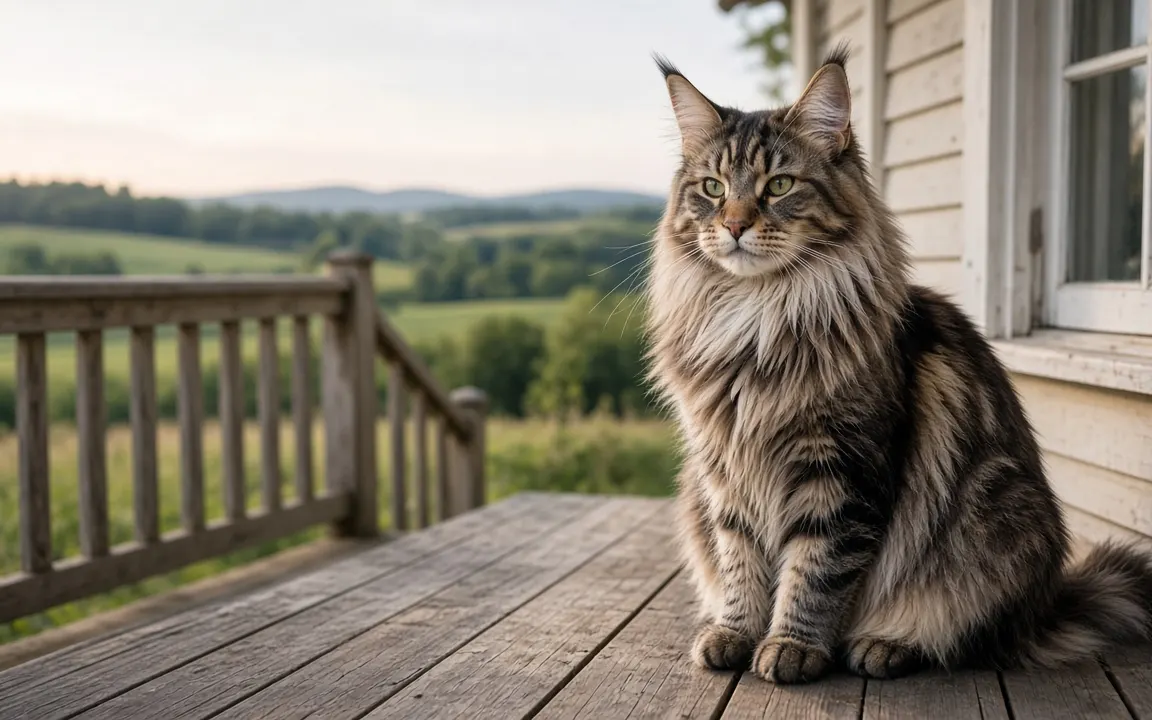
Royal Spring, where the town began, still bubbles up near downtown, and Elkhorn Creek winds through the countryside around it, past stone fences and pastures that many local pets know from weekend outings. Summer highs sit in the upper 80s with heavy humidity, and winters are gentler than in the northern states, with most freezing nights between December and February. Warm spells call for quick cooling on tile or concrete with ice wrapped in cloth.
Georgetown is the Scott County seat, about 16 miles north of Lexington along I-75, and one of the faster-growing towns in Kentucky since a large Toyota plant opened here in the 1980s. Housing runs from historic homes near the courthouse square and Georgetown College to wide subdivisions of newer houses on the edges. Lexington-area cremation services generally reach Georgetown, so confirm pickup timing and whether the drive adds a fee.
Home burial is common in smaller communities, and for a cat it's physically easy: a small grave in a garden you own. It's worth thinking about whether you'll stay in the property and whether foxes, coyotes or dogs are likely to dig; a cat's grave needs to be deep enough to discourage them. Some families choose cremation and bury the ashes instead, which avoids the problem and keeps the option of moving them later.
About 40,883 people live in Georgetown, which makes it the 6th-largest of the 26 Kentucky communities we cover. Some of the providers who serve Georgetown are based about 16 miles away in Lexington, the nearest larger centre, so collection times reflect that drive.
Nearby, we also have local pages for Lexington (15 miles, a larger centre), Frankfort (19 miles) and Nicholasville (26 miles), which can help if your vet or the provider you prefer is based there.
Our estimate
6,400
How many cat-owning households Georgetown has (estimate)
How we calculated this
40,883 ÷ 2.5 = 16,353 households; × 39% (cat) = 6,400. Homes are counted once however many pets they keep.
Our estimate
570
Georgetown families who lose a cat each year (estimate)
How we calculated this
6,400 cat-owning homes ÷ average lifespan (cat: 11.18 yrs) ≈ 570 a year. A floor, not a ceiling.
39%[1]
39% of US households own a cat, which is about 53 million households.
11.18 years[2]
US cats seen at Banfield hospitals have an average life expectancy at birth of 11.18 years.
44.0%[3]
The NFDA projected Kentucky's cremation rate at 44.0% for 2024.
clinic $158; home $359; cremation $180; burial $566[4]
CareCredit's 2025 study put US cat euthanasia at $158 in clinic and $359 at home, cat cremation at $180 and cat cemetery burial at $566.
Sources for the statistics above: CareCredit (Synchrony) and Montoya et al. 2023, Frontiers in Veterinary Science.
The local attitude to cremation
Where fewer families choose cremation for themselves, as in Kentucky (around 44.0%[3]), the business that collects animals from a clinic isn't always a dedicated pet crematory. Some also handle farm animals or general animal disposal. For a cat you want returned, ask where exactly your cat will go and whether the site does individual pet cremation. A good provider will tell you without hesitation.
That Kentucky rate is a human one, published by NFDA 2024 Cremation & Burial Report state projections (via Occasional Sage) (2024). We quote it for Georgetown only as a pointer to how families here already think about cremation.
Georgetown weather and timing
Some families in cold places cremate first and bury the ashes once the ground thaws. It's a lovely compromise for a cat: the small urn comes home now, and in spring you plant it under a shrub, a patch of catnip or the tree your cat used to watch the birds from.
Georgetown winters are cold, with average lows at or below freezing in January, February and December. That gives you a little more time after a death in winter, but it also means frozen ground. If you were hoping to bury your cat in the garden, you may not be able to dig until spring, which is one reason many local families choose cremation first and bury the ashes later.
Cat cremation prices for Georgetown families
Expect the total to depend on four things: private or communal, how your cat is collected, what the ashes come back in and whether you add a keepsake. The weight of a cat barely moves the price. The ranges below are typical US figures; ask any Georgetown provider for a written total before you agree.
Put another way: around 570 cats die in Georgetown each year (our estimate), and private cremation averages clinic $158; home $359; cremation $180; burial $566[4] nationally. That adds up to roughly $0.1 million a year locally, which is why prices and packages differ so much from one provider to the next.
For a line-by-line price table, see the Kentucky overview; for what's included in each option, see our services.

Free tool
Cremation cost calculator
Estimate a realistic price range for your pet's size, location and the type of cremation.
What Kentucky allows: burial, scattering and more
If you leave your cat at the clinic without choosing, most practices will arrange communal cremation by default, and you won't get ashes back. That's legal and dignified, but it can't be undone. Before you sign a release form, check that the box you've ticked matches what you want. The notes below then cover what Kentucky allows for burial and scattering.
Not sure which office covers Georgetown? The Kentucky local government directory is the official list.
We keep Kentucky's burial and scattering rules in one place: the Kentucky rules summary. Before a home burial in Georgetown, also ask the city whether local ordinances add anything.
What to do first, and what can wait
- Book the appointment for a slot that suits everyone who'd like to be present, and find out if a home visit is possible, since your cat is most at ease there.
- Decide on aftercare beforehand, rather than being handed the question at the hardest moment. The usual choices are a burial in the garden, communal cremation or private cremation.
- Ask the vet to arrange collection, or tell them which crematory you've chosen yourself.
- Prepare a quiet space with your cat's bed or favorite blanket, somewhere warm and familiar, and a few treats they love.
- Settle paperwork and payment first if you can, so there's nothing to sign afterwards.
- Stay as long as you need once your cat has gone. Nobody will hurry you.
- Check the written confirmation of the cremation type and return date before the vet leaves.
Keeping your cat close
Many Georgetown families moved here for work in the past few decades and have no family farm nearby to bury an animal, so cremation has become a common choice even though Kentucky overall still favors burial for people. Ashes often stay in the house, on a shelf near the pet's old bed, or wait for a planting day in the backyard garden.
See what each option includes on our services page, go deeper with the guides or catch up on recent articles, run the numbers with the free planning tools, or see how other readers answered in our polls. If you live between Georgetown and Owensboro, Richmond, Lexington and Covington, either page applies. Every other community in Kentucky, and all of the United States, is listed too.

Reader polls
What would you choose?
Vote anonymously and see how other readers answered. The results are live counts from people who visit this site, so they show real opinions, not a scientific sample.
For your cat, would you want their own ashes returned?
Tap an answer to vote and see how others answered. Anonymous.
Which small keepsake would mean the most from your cat?
Tap an answer to vote and see how others answered. Anonymous.
If you had to decide today, which aftercare would you choose for your pet?
Tap an answer to vote and see how others answered. Anonymous.

Free tools to help you plan
Cremation cost calculator
Estimate a realistic price range for your pet's size, location and the type of cremation.

Urn size calculator
Find the urn volume you need from your pet's weight, plus keepsake and sharing options.

Ashes weight estimator
See roughly how much ash to expect back, by species and body weight.
Questions people ask
Roughly how many cats die in Georgetown each year?
Our estimate is around 570. It comes from Georgetown's population (about 40,883), the average household size, the share of homes with a cat (about 6,400 households here) and the average lifespan. It is arithmetic, not a count, so read it as a rough floor.
When is the hardest time of year to arrange a burial in Georgetown?
January, February and December: average lows are below freezing then, and frozen ground makes a home grave slow or impossible until it thaws. The other pressure point is July, when highs around 87°F mean a body needs cooling and collecting quickly.
Is cremation common in Kentucky?
For people, yes: about 44.0%[3] of Kentucky deaths end in cremation, according to NFDA 2024 Cremation & Burial Report state projections (via Occasional Sage) (2024). Nobody publishes the same figure for pets, but in our experience pet choices in Georgetown follow the human pattern closely, so cremation is the default most families here start from.
Will I have to travel to Lexington to arrange things?
Not usually. Providers based in Lexington (roughly 16 miles from Georgetown) collect from here as a matter of routine, and the paperwork is done by email or phone. If you want to be present for a witnessed cremation, that is when the drive matters.
Can I take my cat to the crematory myself?
Usually, yes, and with a cat it's easy. Call first to agree a time, then place your cat in a carrier or a box lined with a blanket, on the floor or back seat of the car, and drive straight there. Many families find this last drive meaningful. It also saves the collection fee, which for a cat can be a large part of the total.
Why did my cat hide before they died?
Hiding is instinct. A cat who feels ill or weak looks for somewhere small, quiet and protected, like under a bed, in a closet or beneath a deck. It doesn't mean your cat was frightened of you or that you missed something obvious; cats are very good at concealing illness until late. Many owners find their cat this way, and it's okay to need help with what comes next.


Sources and our estimates
- [1] 39% of US households own a cat, which is about 53 million households. American Pet Products Association (APPA) 2025 State of the Industry, 2025.
- [2] US cats seen at Banfield hospitals have an average life expectancy at birth of 11.18 years. Montoya et al. 2023, Frontiers in Veterinary Science - Banfield Pet Hospital life expectancy tables (13.3 million dogs, 2.4 million cats, 2013-2019), 2023.
- [3] The NFDA projected Kentucky's cremation rate at 44.0% for 2024. NFDA 2024 Cremation & Burial Report state projections (via Occasional Sage), 2024.
- [4] CareCredit's 2025 study put US cat euthanasia at $158 in clinic and $359 at home, cat cremation at $180 and cat cemetery burial at $566. CareCredit (Synchrony) - Cat Euthanasia: Understanding Your Options and Costs (2025 ASQ360 procedural cost study), 2025.
- [5] Roughly 4.7 million pet cats likely die in the US each year. Our estimate: US cat-owning households (53M) x 1 cat / US cat life expectancy (11.18 yrs). How we calculate.
Get cat cremation options in Georgetown
Tell us what you need and where you are. We'll reply by email with clear options and prices so you can decide in your own time.