Cat cremation in Gardner, Kansas
Around 360 Gardner families say goodbye to a cat every year, by our estimate. Here's what cremation costs locally, how it works and what to ask first.
- Help for multi-cat households
- Private cremation confirmed in writing
- Options for community cats too
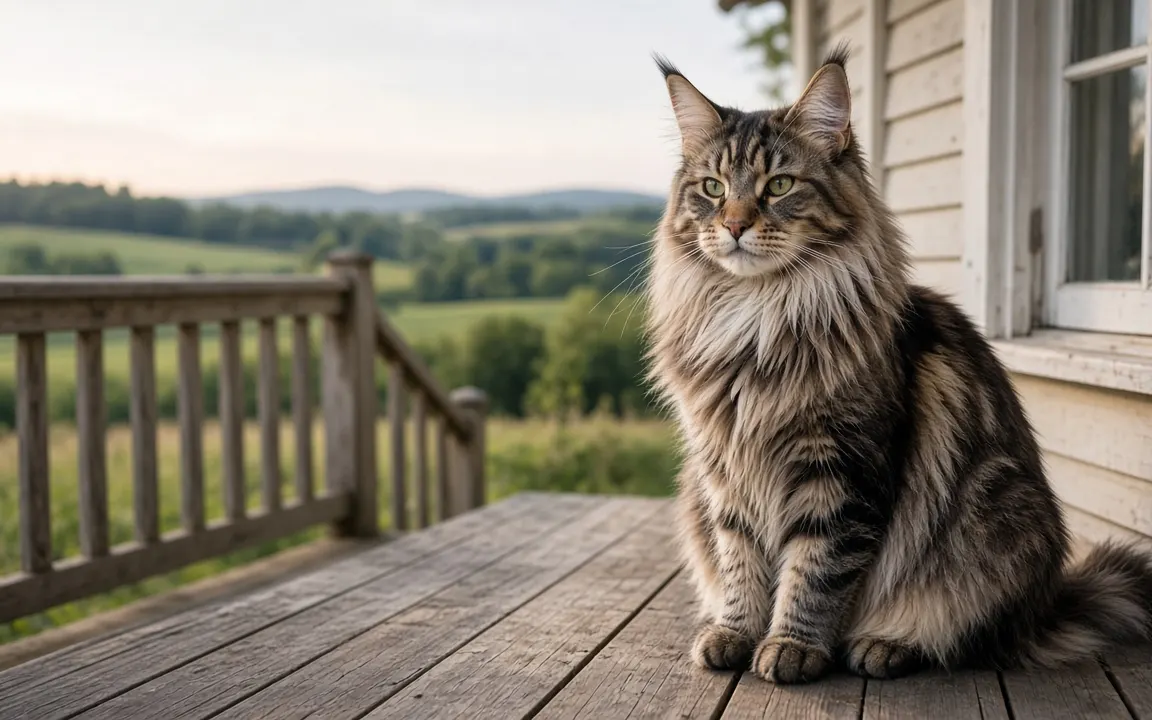
Gardner, Kansas
What arranging cat cremation in Gardner is like
Gardner has a long history as a crossroads: just west of town, the Santa Fe Trail and the Oregon and California trails split, and pioneers passed through by the thousands. Today it's a fast-growing commuter town. Many residents are young families, and cremation, often with ashes kept in the house, is the common choice when a pet dies. Some families bury a portion under a new tree in the yard.
Gardner's weather follows the Kansas City pattern with slightly colder winter nights: July highs near 89F, January lows around 18F, and frost possible from November into March. Gardner Lake lies northeast of town, and newer neighborhoods often back onto open ground. In summer heat, a body should be cooled promptly with cloth-wrapped cold packs; in winter, a garage floor is often enough overnight.
Cats around Gardner often live partly outdoors, patrolling yards, barns and fields. That freedom has a cost: many rural and small-town cats die out of sight, on a road or somewhere they went to rest, and owners sometimes find them after a day or two. If that's happened, handle your cat gently with gloves and a towel, place them in a box, and call your vet. A private cremation is still entirely possible.
With roughly 26,154 residents, Gardner is the 16th-largest of the 23 Kansas communities we cover. Some of the providers who serve Gardner are based about 18 miles away in Overland Park, the nearest larger centre, so collection times reflect that drive.
Families in Gardner often end up using a provider from Olathe (7 miles, a larger centre), Lenexa (12 miles, a larger centre) and Shawnee (16 miles, a larger centre). That is normal: crematories serve a radius, not a single town, and the drive is priced into collection.
Our estimate
4,100
Estimated cat-owning households in Gardner
How we calculated this
26,154 ÷ 2.5 = 10,462 households; × 39% (cat) = 4,100. Multi-pet homes count once.
Our estimate
360
Gardner families who lose a cat each year (estimate)
How we calculated this
4,100 cat-owning homes ÷ average lifespan (cat: 11.18 yrs) ≈ 360 a year. The real figure is unlikely to be lower.
39%[1]
39% of US households own a cat, which is about 53 million households.
11.18 years[2]
US cats seen at Banfield hospitals have an average life expectancy at birth of 11.18 years.
64.6%[3]
The NFDA projected Kansas's cremation rate at 64.6% for 2024.
clinic $158; home $359; cremation $180; burial $566[4]
CareCredit's 2025 study put US cat euthanasia at $158 in clinic and $359 at home, cat cremation at $180 and cat cemetery burial at $566.
We built the this numbers from CareCredit (Synchrony) and Montoya et al. 2023, Frontiers in Veterinary Science, and both are worth a look if you want the detail.
Why cremation is familiar in Kansas, or isn't
About 64.6%[3] of people in Kansas choose cremation, and the share keeps climbing as families move and live further apart. That's one of the most common reasons cat owners choose it too: a small urn travels, a garden grave doesn't. If there's already a spot on family land where other cats are buried, though, burying the ashes there can give you both.
Source for the Kansas number: NFDA 2024 Cremation & Burial Report state projections (via Occasional Sage) (2024). Nobody publishes a pet cremation rate for Gardner, so the human figure is the best local signal available.
How Gardner's weather affects the first few hours
If your cat died outdoors during Gardner's cold spell and wasn't found for a while, they may be stiff or frozen. Don't try to warm or straighten them. Lay them on a blanket in a box, keep them in a cold garage or porch, and tell the vet or crematory what happened. They see this every winter and will know what to do, and you can still choose private cremation with the ashes returned.
Cold weather brings its own risks for outdoor cats. They look for warmth under car hoods and in engine bays, so a quick knock on the hood before starting the car is a common habit in places like Gardner. Antifreeze is another winter danger: it tastes sweet to cats and is highly toxic. If an outdoor cat dies suddenly in January, February, March, November and December, tell your vet what you know; they may want to check the cause.
What cat cremation costs in Gardner
Expect the total to depend on four things: private or communal, how your cat is collected, what the ashes come back in and whether you add a keepsake. The weight of a cat barely moves the price. The ranges below are typical US figures; ask any Gardner provider for a written total before you agree.
Here's a number you won't find elsewhere: if every one of the roughly 360 cats lost in Gardner each year were privately cremated at the national average of about clinic $158; home $359; cremation $180; burial $566[4], local families would spend around $0.1 million a year. That's our estimate, and it's why several providers compete for work here.
We keep the detailed Kansas price table on one page so it stays current: see Kansas prices.

Free tool
Cremation cost calculator
Estimate a realistic price range for your pet's size, location and the type of cremation.
Rules worth knowing in Kansas
Most of the decisions after a cat dies are yours alone. The exceptions are burial and scattering, which Kansas and your local council or city may regulate, and, in some places, updating your cat's microchip record so the database knows they've died.
Kansas keeps an official directory of local governments; use it to reach the county or city office that covers Gardner.
Home burial and scattering are governed at the Kansas level first; our Kansas rules summary has the detail. Then check whether Gardner or your HOA adds anything.
The first 48 hours, step by step
- Take a breath. The next hour asks nothing of you. When a cat dies at home, set them down on a towel, gently close the eyes if they'll stay shut, and fold the legs under as though they're curled up asleep.
- Take anything you want to keep now: snip a little chest fur, or some from inside a hind leg, gather any whiskers that have dropped in their bed, and set the collar or tag aside.
- Place your cat in a box or basket lined with their own blanket, in the coolest room, with the door closed so other pets can't disturb them.
- Call your vet (after hours, an emergency clinic will do) and describe what has happened. If you have any doubt, they can confirm your cat has died, and they'll tell you how their aftercare works.
- Decide on private or communal cremation. This is the choice that shapes everything else, including the price.
- Arrange collection either from the house or the vet's, or take your cat to the provider yourself, and get the full cost written down.
- Let yourself grieve. Share the news with everyone who loved your cat, and leave the food bowls out until you feel ready to move them.
Memorials and keepsakes for your cat
Gardner sits on the southwest edge of Johnson County, about 18 miles from Overland Park along I-35, where new subdivisions meet open farmland. Many homes are recently built, on streets that were fields not long ago, with a few older houses around the original town center. Kansas City area providers do reach Gardner, but some treat it as the outer edge of their area, so ask about mileage fees.
run the numbers with the free planning tools, Our services overview lays out every option side by side, or see how other readers answered in our polls, look through our guides and the blog. Close to Gardner we also cover Kansas City, Olathe, Wichita and Lawrence; the full list for Kansas and for the United States is a click away.

Reader polls
What would you choose?
Vote anonymously and see how other readers answered. The results are live counts from people who visit this site, so they show real opinions, not a scientific sample.
What kind of life did (or does) your cat lead?
Tap an answer to vote and see how others answered. Anonymous.
Which small keepsake would mean the most from your cat?
Tap an answer to vote and see how others answered. Anonymous.
If you had to decide today, which aftercare would you choose for your pet?
Tap an answer to vote and see how others answered. Anonymous.

Free tools to help you plan
Cremation cost calculator
Estimate a realistic price range for your pet's size, location and the type of cremation.

Urn size calculator
Find the urn volume you need from your pet's weight, plus keepsake and sharing options.

Ashes weight estimator
See roughly how much ash to expect back, by species and body weight.
Questions people ask
Which nearby towns can I compare with Gardner?
The closest communities we cover are Olathe (about 7 miles), Lenexa (about 12 miles) and Shawnee (about 16 miles). Providers based in those places often serve Gardner too. Ask each one for a written total that includes collection, so the distance is priced in.
Will I have to travel to Overland Park to arrange things?
Not usually. Providers based in Overland Park (roughly 18 miles from Gardner) collect from here as a matter of routine, and the paperwork is done by email or phone. If you want to be present for a witnessed cremation, that is when the drive matters.
How many cat owners live in Gardner?
By our estimate, about 4,100 households in Gardner have at least one cat, and around 360 are lost each year. We calculate this from the city's population of about 26,154, the average household size and national ownership and lifespan figures, so treat it as a floor rather than an exact count.
Does the Gardner climate change what I should do first?
Only the timing. In July, with highs near 89°F, cool the body and book collection the same day. In January, February, March, November and December, when lows sit below freezing, a home burial may have to wait for a thaw, so cremation with ashes returned keeps your options open.
Is losing a cat common in Gardner, or am I overreacting?
You're not overreacting, and you're far from alone. By our estimate, about 360 Gardner families lose a cat each year, out of roughly 4,100 households with one. In one UK survey, 66.9%[6] of bereaved owners were surprised by how intense their grief was. Taking a day off, talking to friends or calling a pet-loss line are all reasonable.
How much ash will I get back from my cat?
Much less than people expect. Cremated remains weigh about 3 to 5% of body weight[7], so a 12 lb cat would be expected to return about 6.7 oz[8], roughly a teacup's worth. An urn of about 12 cubic inches is usually enough[9]. Our urn size calculator works it out from your cat's weight.


Sources and our estimates
- [1] 39% of US households own a cat, which is about 53 million households. American Pet Products Association (APPA) 2025 State of the Industry, 2025.
- [2] US cats seen at Banfield hospitals have an average life expectancy at birth of 11.18 years. Montoya et al. 2023, Frontiers in Veterinary Science - Banfield Pet Hospital life expectancy tables (13.3 million dogs, 2.4 million cats, 2013-2019), 2023.
- [3] The NFDA projected Kansas's cremation rate at 64.6% for 2024. NFDA 2024 Cremation & Burial Report state projections (via Occasional Sage), 2024.
- [4] CareCredit's 2025 study put US cat euthanasia at $158 in clinic and $359 at home, cat cremation at $180 and cat cemetery burial at $566. CareCredit (Synchrony) - Cat Euthanasia: Understanding Your Options and Costs (2025 ASQ360 procedural cost study), 2025.
- [5] For cats, at-home euthanasia costs about 2.3x the in-clinic price in the US ($359 vs $158). Our estimate: 359 / 158 = 2.27. How we calculate.
- [6] 66.9% of respondents were surprised by how intense their grief was after losing a pet. RSPCA — Pet Loss Survey Results, 2026.
- [7] Embrace notes cremated remains typically weigh about 3-5% of the pet's original body weight. Embrace Pet Insurance - Bury or Cremate Your Dog? Costs, Pros & Cons, 2025.
- [8] A 12 lb cat would be expected to return about 6.7 oz (0.42 lb) of cremated remains. Our estimate: 12 lb x 3.5% x 16 oz/lb. How we calculate.
- [9] Using the industry rule of thumb of 1 cubic inch of urn space per pound of body weight, a 12 lb cat needs an urn of about 12 cubic inches; a 70 lb dog needs about 70 cubic inches. Our estimate: urn cu in = body weight lb x 1 (industry rule of thumb, not a measured value). How we calculate.
Tell us about your cat
Tell us what you need and where you are. We'll reply by email with clear options and prices so you can decide in your own time.